
The Hospital’s Katrina Crisis
Five Days at MemorialThe central crisis follows Memorial Medical Center from confidence in its storm readiness through isolation, improvised evacuation, and a contested aftermath.
increasing Bearing strength in each event
 decreasing
Bearing strength in each eventdecreasingA Trusted Refuge

A Trusted Refuge
Before the Storm
Memorial Medical Center had long been treated as a dependable refuge during hurricanes. Staff expected to ride out the storm and return to ordinary work afterward.
Hidden Vulnerabilities
The hospital’s flood-prone setting and low-lying electrical equipment made that confidence precarious. Familiar routines concealed the consequences of a prolonged citywide emergency.
Katrina Approaches
Katrina Approaches
Preparing In Place
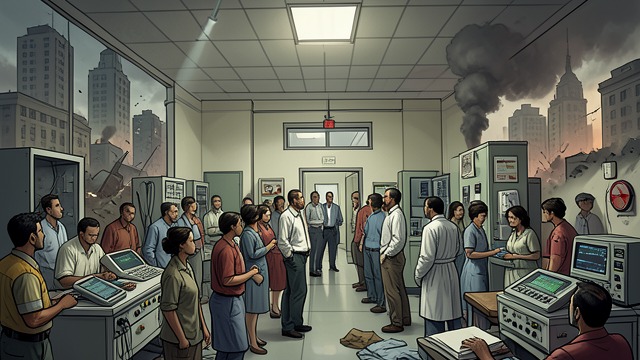
As Hurricane Katrina intensified, patients and hundreds of staff, relatives, and visitors gathered at Memorial. The hospital remained open under the assumption that its emergency systems would sustain care.
The Evacuation Gap
The city’s mandatory evacuation order exempted hospitals, while plans for moving their patients remained incomplete. The decision to stay would soon leave vulnerable people dependent on systems never tested for this scale of disaster.
Floodwaters Return
Floodwaters Return
A False Reprieve
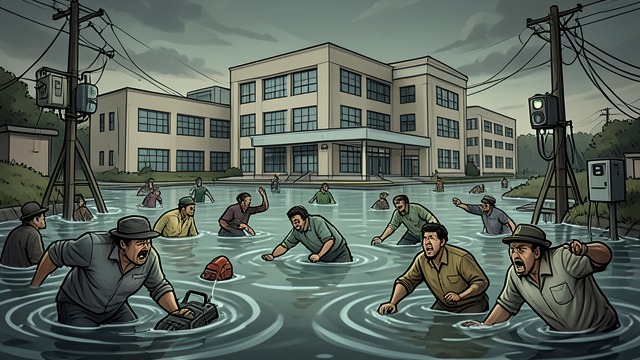
After the hurricane passed, staff initially thought Memorial had weathered the storm. Then floodwater advanced through the city and surrounded the hospital.
Survival Mode
Leaders learned that the levee system had failed and recognized that the hospital’s power infrastructure was exposed. The institution shifted from routine operations toward an evacuation it had not adequately planned.
The Long Evacuation
The Long Evacuation
Improvised Routes
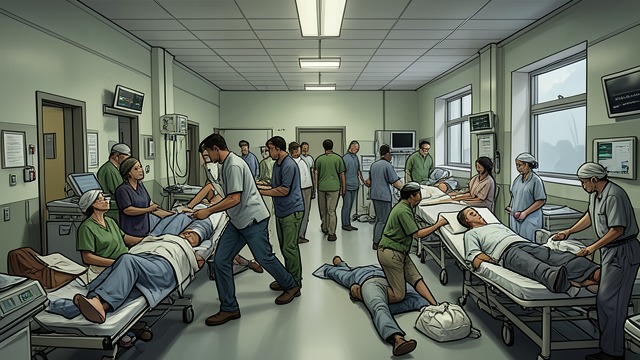
Patients left by military truck, helicopter, boat, and arduous stairway transfers. Each route depended on changing water levels, aircraft availability, staff strength, and uncertain coordination beyond the hospital.
Unequal Priorities
The hospital divided patients into categories, placing the sickest and those with DNR orders toward the end. As rescue assets arrived and the situation evolved, that ordering became a consequential judgment rather than a neutral administrative tool.
Bodies and Questions

Bodies and Questions
The Chapel Discovery
After patients and staff had left, bodies remained inside Memorial. Their discovery in the chapel and elsewhere transformed an evacuation disaster into a public inquiry about how patients had died.
A Second Crisis
Families searched for missing relatives while officials debated responsibility. The hospital’s experience became a test of institutional accountability, medical ethics, and the limits of emergency preparation.
Before August 2005
August 27–28, 2005
August 30, 2005
August 30–September 1, 2005
September 6–11, 2005
